Lesson 1
Start With a Market Question
Begin with a market question that is real, even if it is still fuzzy.
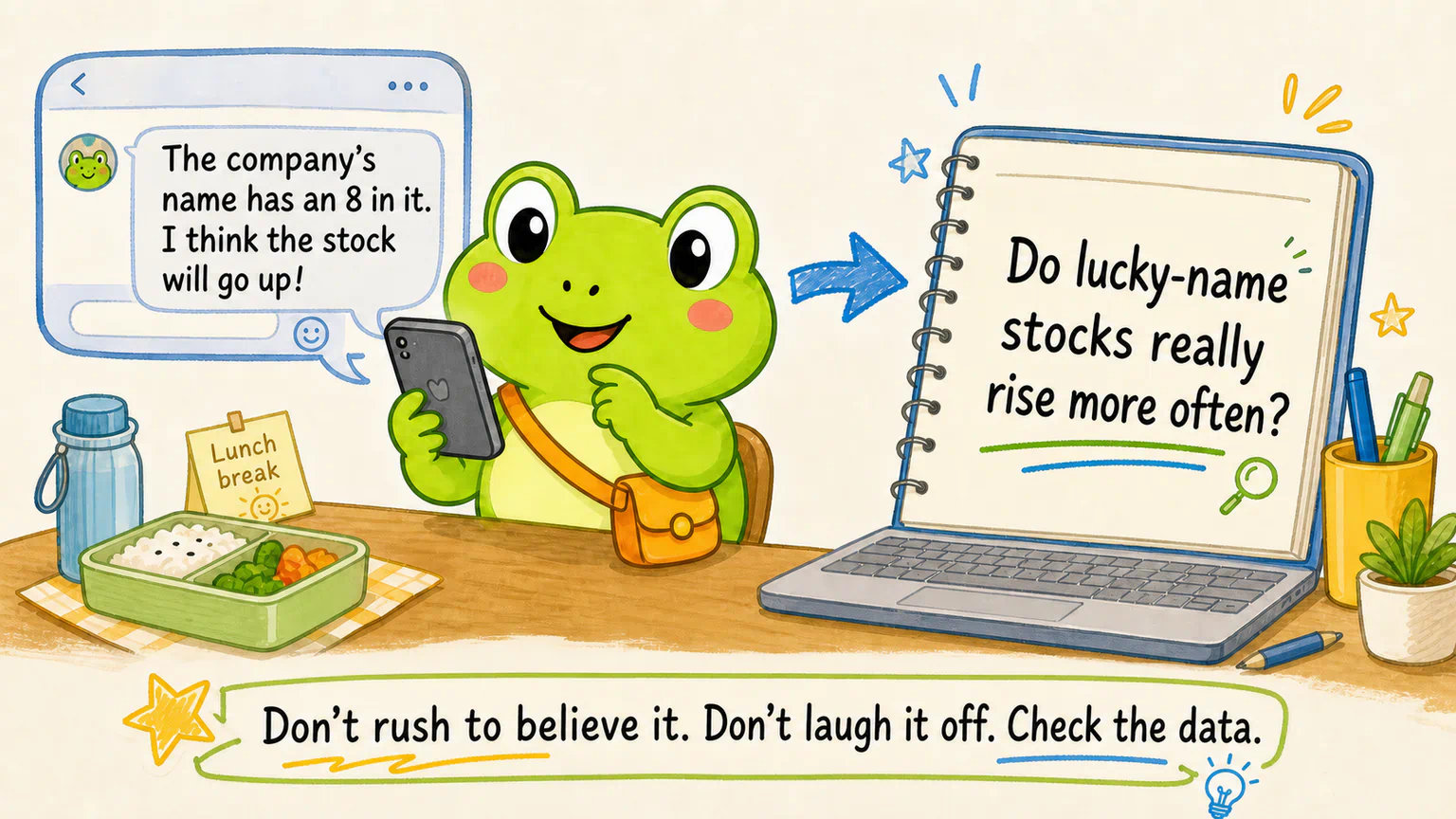
At lunch, a friend sent Hoppy a stock tip.
“The company’s name has an eight in it. Eight is lucky in China, right? I think the stock will go up.”
Hoppy stared at the screen for a few seconds.
He didn’t buy it. He didn’t laugh either. Instead, he opened a blank document and typed:
In China’s stock market, do stocks with lucky-sounding names really go up more often?
In Chinese culture, the number eight is often associated with luck and prosperity. That cultural association is part of the question we are testing—not evidence that the idea is true.
The idea sounded a little ridiculous.
But quantitative research has a useful habit: don’t rush to believe an idea, but don’t laugh it off either. See what the data has to say.
This course is about taking “I think...” and asking, “What does the data say?”
Your question can start out messy
After typing that sentence, Hoppy stared at the document again.
“Wait. I can’t even explain what ‘quant’ means, and I don’t know how to write a backtest. Does this count as research?”
It does. At least, it can be the beginning of research.
A question is rarely neat when it first shows up. It might come from a news story, a trade that went badly, something a friend said, or a thought that popped into your head while staring at a chart.
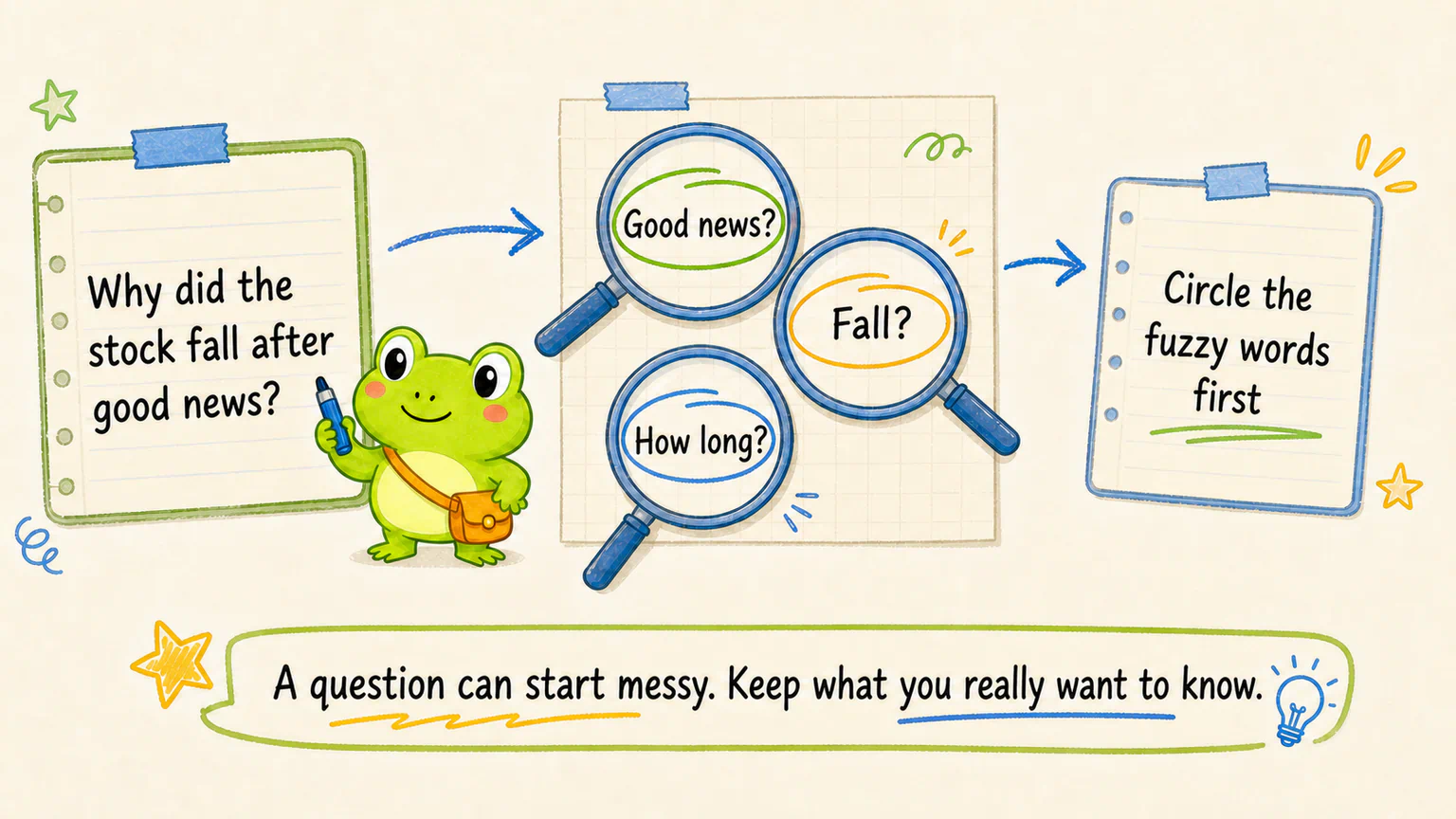
“Why did the stock fall after the company announced good news?”
“If this industry has such a bright future, why aren’t its stocks going anywhere?”
“After a nine-beat signal completes, is a reversal really more likely?”
These questions are still rough around the edges.
After the signal, are we looking at three days or three months?
We haven’t said yet.
That’s fine. A question doesn’t need to read like a research paper on day one. Keep the thing you genuinely want to know; we can clean up the fuzzy parts later.
We’ll learn how to break a vague “I think...” into something we can actually check. If we can make the question precise enough, we can look for data. If we can’t, we can at least see what is getting in the way.
That is much more useful than pretending we already know the answer and asking the data to agree.
Already know some Python? Bring it along
Maybe you arrived with a little Python rather than a stock question.
You’ve built a calculator, a to-do list, or a few small scripts. The code runs, but every exercise ends with the same question: now what?
If that sounds familiar, bring your Python along. It will come in handy soon.
If you don’t know Python, you don’t need to leave and learn it first. We’ll begin with the basics of markets and quantitative thinking. When we need code, an AI research assistant will work alongside us.
Programs can move data around, calculate results, and draw charts. But they can’t automatically tell us whether we asked a good question—or whether a result that looks great is just a fluke.
Bring one question
Now it’s your turn.
Have you noticed anything in the market that made you stop and ask, “Why?”
If so, don’t polish it into professional language yet. Bring it as it is. It can sound as odd as “In China’s stock market, do stocks with an eight in their name go up more often?”
If nothing comes to mind, that’s fine too. Hoppy has already tucked the lucky-name question into his research bag. We can borrow his question for a while.
The answer can wait.
First, we’ll learn how to ask. Then, we’ll learn how to test.
In the next chapter, we’ll see what you’ll be able to take away from this course.
Lesson discussion
Share a question, insight, or different view—and see how other learners are thinking.